
Samatha

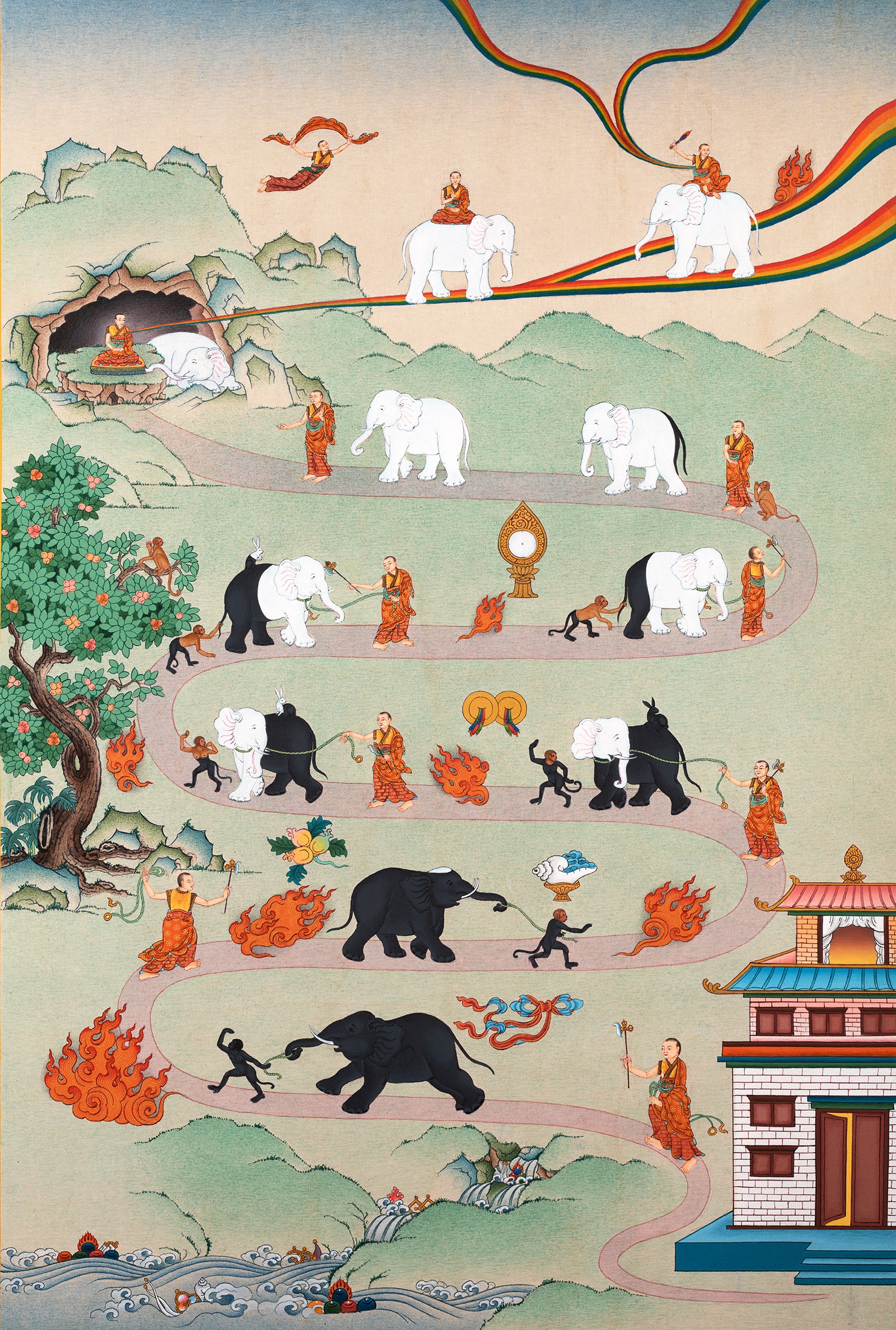
Samatha in Pali, shamatha in Sanskrit or chiné in Tibetan designates in Buddhism “tranquility of mind”, “quietude” or “mental calm.
Samatha (or Shamatha) means calm, tranquility, or peaceful abiding in Buddhism, referring to a core meditation practice focused on developing deep concentration (samadhi) by holding attention on a single object, like the breath, to still the mind and prepare it for insight (vipassana). It cultivates mental stability, reducing distracting thoughts and fostering a quiet, unified mind, essential for deeper spiritual understanding.
Key aspects of Samatha:
Meaning: Calm, serenity, stillness, tranquil abiding, concentration.
Purpose:
To unify and steady the mind, developing one-pointed focus.
Method:
Sustained attention on a chosen object (breath, mantra, image) while gently returning focus when the mind wanders.
Role in Buddhism:
One of two main paths (with Vipassanā/insight), providing the mental stability needed for clear, wise observation of reality.
In summary:
Samatha is the practice of calming and concentrating the mind, a foundational step in Buddhist meditation, creating a clear, stable “window” through which deeper wisdom can be seen.
 Previous Post
 97a Meegolla Rd
 hello@nalanda-center.org
 0041 76 479 30 60