
Ayurveda
Ayurveda
Ayurveda, the traditional Indian medicine, is based largely on Sankhya philosophy, one of the main systems of thought in India. It is the foundation for much of the yoga philosophy and practice so popular throughout India and in the West today.
Its fundamental premise is that each individual should live according to their own true nature, according to the Tao: The Path. It stipulates that “the way which can be named is not the way. It is nameless, formless and eternal. It is the origin of all that is and it is all that is. It is nothing and it is everything. It is doing and not doing.”
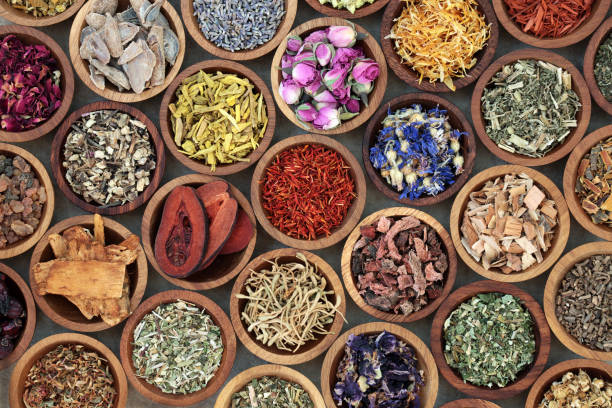
An Ayurvedic treatment consists of balancing the three gunas using diet, herbal treatments, massages, inner cleansings as well as yoga and meditation.
Read more:
Sankhya philosophy is one of cosmic dualism. It is similar to the Yin/Yang principle of Taoist cosmology. According to Sankhya, two primordial entities: purusha : consciousness and prakriti: primordial matter, manifested from their unmanifested state. The interaction between these two create a fine material called mahat: universal intelligence and from mahat emerges individual self-awareness and differentiation: ahamkara or ego. All manifested objects are composed of three qualities or gunas: sattva: clarity, purity, rajas: turbulence, activity and tamas: inertia, ignorance. The three gunas correspond to our states of mind. If we are in a sattvic state, we are peaceful, calm, compassionate, wise and clear. If we are in a rajasic state, we are unsettled, agitated and discontented. And when a state of Tamas rules, we feel lazy, foggy and only slightly self-aware.
Ayurveda as well as Chinese medicine have arisen from Taoism, which is recognized as one of the six main religions in China and is believed to have evolved out of a pre-Taoist shamanistic tradition.
 97a Meegolla Rd
 hello@nalanda-center.org
 0094 74 339 85 92